Henry David Thoreau · 1817–1862
A life
deliberately lived.
He is remembered as a man alone beside a pond. His real life was more social, more practical, and more demanding than the myth.
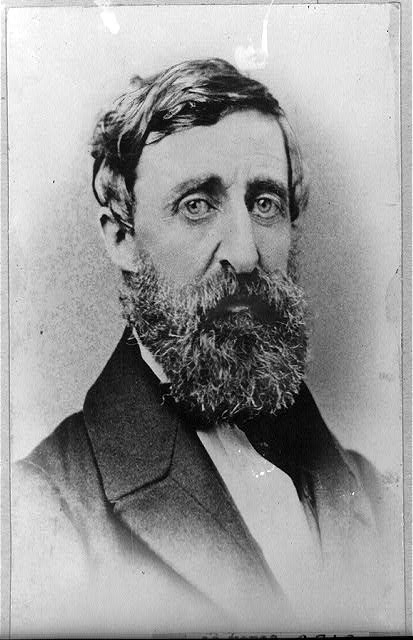
Before the woods
Thoreau grew up among pencil-making, boarding-house work, conversation, and Concord’s rivers. He was not born outside society. His family worked, argued, hosted abolitionists, and made a living with their hands. After Harvard, he briefly taught school, resigning rather than administer corporal punishment. With his brother John he opened a school organized around walks, direct observation, and gentler discipline.
John’s sudden death in 1842 shook him profoundly. Work at the family pencil business, surveying, lecturing, writing, and long daily observation became the mixed economy of his adult life. The simple life was never an absence of labor. It was an attempt to decide which labor was worth the cost.
“The price of anything is the amount of life you exchange for it.”Walden, paraphrased from “Economy”
Two years, two months, two days
On July 4, 1845, at twenty-seven, Thoreau moved into a ten-by-fifteen-foot house near Walden Pond on land owned by his friend Ralph Waldo Emerson. He was close enough to walk into Concord. He visited family, welcomed guests, did occasional work, and often ate at home. Walden was an experiment in selective distance, not heroic isolation.
He tracked every board and nail because economics was moral to him: unnecessary expense meant unnecessary labor, and unnecessary labor meant attention spent elsewhere. Yet the arithmetic was selective. Access to Emerson’s land, family support, and proximity to town made the experiment possible. To learn from Walden is not to pretend it was self-sufficiency.
Attention as a form of life
Thoreau’s journals fill thousands of pages with flowering dates, ice depths, animal tracks, seeds, weather, and the changing color of leaves. Looking was not background to his philosophy. It was the practice itself. A day became larger when he noticed what habit usually erased.
His work now helps researchers study historical climate and seasonal change. That usefulness would have pleased the surveyor in him, though his deeper claim was less measurable: attention can rescue the world from becoming merely familiar.
Conscience in public
The solitary image can obscure a fiercely political man. Thoreau opposed slavery, aided people escaping it, defended John Brown, and argued that obedience does not release a person from moral responsibility. His refusal to pay a poll tax led to one night in jail. The essay later called “Civil Disobedience” asks what we owe conscience when law protects injustice.
His answer was demanding and incomplete. Individual refusal alone cannot replace collective action or institutions. But his life insists that inward clarity must eventually become outward conduct.
What to carry forward
Thoreau did not provide a lifestyle template. Few people have a pond, supportive family, flexible work, or the freedom to refuse ordinary obligations. The durable lesson is a method: examine the cost of what you pursue; protect enough time to notice; distrust inherited definitions of success; and let conviction alter your calendar.
He left Walden because the experiment had given what it could. “I had several more lives to live,” he wrote. Deliberate living was not staying in one pure place. It was remaining awake when the place changed.
Sources & rights
Read the life at its roots.
This biography is original editorial writing based on public-domain primary and historical sources. Quotations should be checked against the linked editions before scholarly use.